There’s this growing narrative that everyone “owes” something to society. That if you’re not constantly producing, achieving, or climbing, then you’re somehow a burden. But that’s not how value—or morality—actually works.
You don’t owe society anything by default. You were born. You exist. That’s not a debt. That’s life.
What you do owe is directly tied to what you take. What you ask for. What you demand.
If you’re draining resources, taking special treatment, demanding wealth, power, attention, or support—then yes, accountability comes with that. But if you’re not asking for anything and not hurting anyone? You don’t have to justify your existence to anyone.
That’s not selfish. That’s freedom.
The moment we start treating existence as a debt, we’ve entered moral slavery. And the people screaming the loudest about what others “owe” are often the ones doing the least to fix their own lives. They are the ones taking the most from society.
We should stop judging people by what they have and start judging them by what they extract versus what they return—their power-to-weight ratio.
Are you feeding the system—or bleeding it? Are you moving things forward—or just adding dead weight?
Because it’s not about being rich or poor. It’s about whether you’re a drain or a driver. Whether you’re creating value or just hoarding it and calling that genius.
Too much buildup with no output? That’s dysfunction. Too much growth with no direction? That’s cancer. Too much stored wealth that nobody can use? That’s rot. And yeah, the metaphor holds up: hoarding value is no different from hoarding calories or toxins in the body. It slows things down. Breaks things. Kills the system.
We’ve all heard “Give a man a fish, feed him for a day. Teach a man to fish, feed him for life.”
But let’s push it further: Give a man a thousand fish and teach him how to store them forever? Now you’ve got a guy hoarding value while the world around him starves. And no matter how much he stockpiles, he’ll never be worth more than the person who still knows how to fish. Who adapts, creates, shares, and moves forward.
That’s the real measure of value—not how many resources you sit on, but how many you can produce given what you consume.
And if you really want to give something meaningful back to society, don’t start with hashtags or empty lectures. Start by making yourself stronger, sharper, healthier. Improve your body. Sharpen your mind. Learn how to fish.
Because you can’t lift others up if you’re sinking yourself. You can’t preach contribution when you haven’t learned discipline. And you definitely shouldn’t be moralizing from the sidelines if you’ve done nothing to master your own life.
If someone’s demanding to know what you’ve done for society— Ask them how much they walked today. How much they ate. Ask them how much they actually need to be happy. And whether they’re a source of strength—or just another drain.
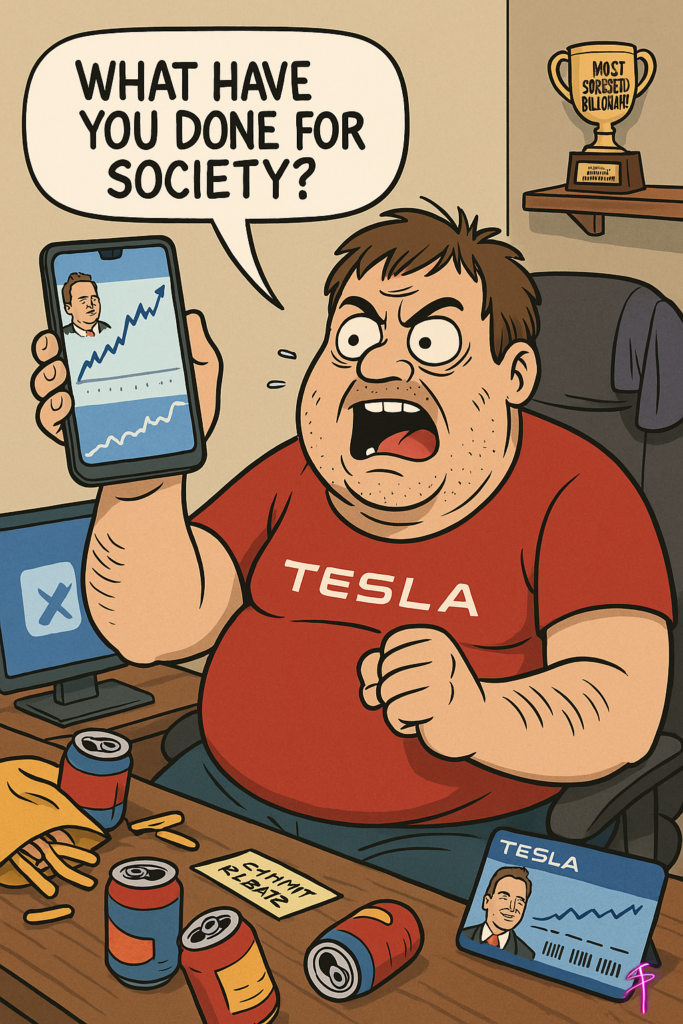
The real question isn’t “What have you done for society?” It’s “How have you made yourself better today, so you’re actually capable of helping anyone?”
That’s where it all starts. Not with a vault of fish—
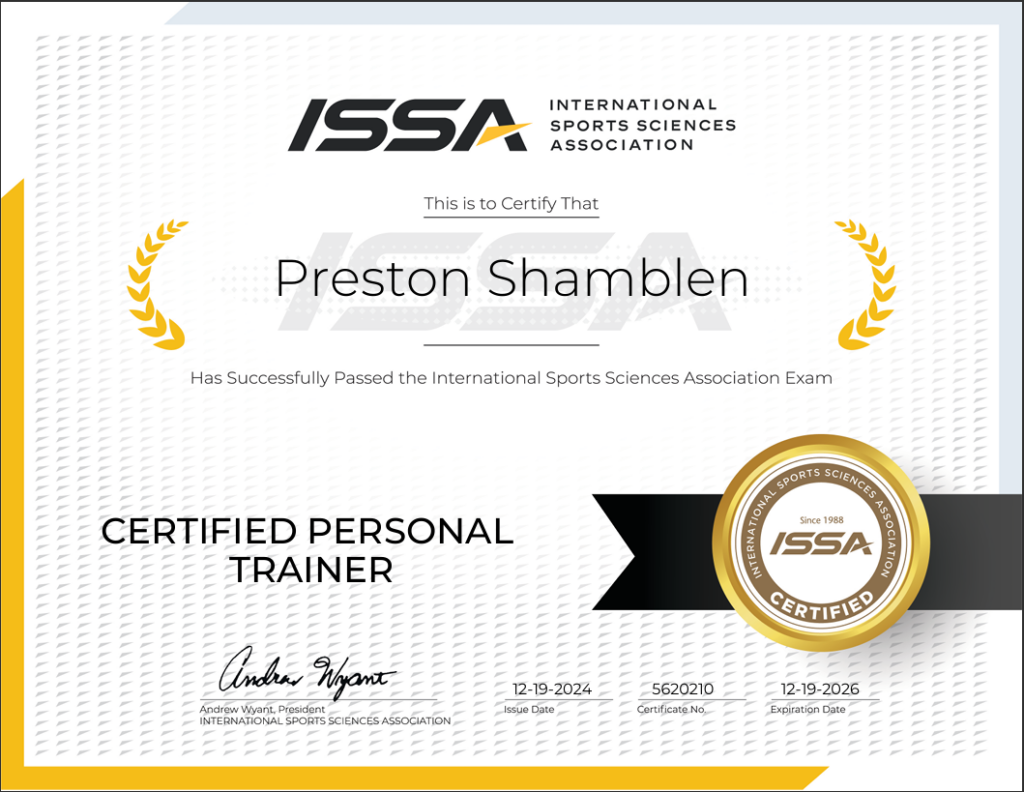
I didn’t get certified because I needed a job. I got certified because even after losing 90 pounds, training for years, and playing just about every sport out there, I still didn’t know everything and I want to.
You can’t know what you don’t know. So I kept learning. I went to a personal trainer myself. I did the body scans. I paid attention, counted calories. I experimented. And yeah—I also wanted people to know I knew what I was talking about.
Even now, I rediscover the value of walking or rucking every single day. That’s why I got certified—not to say I have all the answers, but to make sure I keep asking better questions.
You Don’t Know Until You Do It
Here’s the thing no one tells you: you usually don’t even understand why something matters until after you’ve done it—over and over again.
Your body will come up with every excuse not to move. It’ll lie to you. It’ll tell you you’re tired, you’re sore, it’s too late, you’re too stressed. But the best rucks I’ve ever done—the longest, most satisfying ones—often happened on the days I least wanted to go.
We think the reason to act comes first. But it doesn’t.
Understanding comes through action. That’s true in fitness. That’s true in life.
If you wait until you fully understand before you move, you’ll never move.
I ruck because my higher self has decided I need to whether I feel like it or not. I train because it changes people. I coach because I want others to feel what I feel every day now—stronger, clearer, healthier.
What I’m Certified In
ISSA Certified Personal Trainer – Completed
Fitness Nutrition Specialist – In progress
Online Coaching – In progress
Strength & Endurance – Planned
I’m reading every word of these books. Not just checking boxes. When I coach you, I know what I’m talking about—not because of the certificate, but because of the work behind it.
What’s Next
I’m not offering coaching to everyone—yet.
But if you’re someone who’s ready to change, or you just want to stay in the loop, reach out.
If you’re already spending $30-50 a night drinking with people who don’t care if you live or die…
Maybe try spending $50 or so with someone who wants to help you live longer and stronger…
Coming Soon: Coaching That Actually Works
There’ll be a signup link soon—for the people who are serious. When it goes live, you’ll know. And when it does, it won’t be a copy-paste PDF or a one-size-fits-all nonsense plan. It’ll be real. Like everything else here or with my name on it.
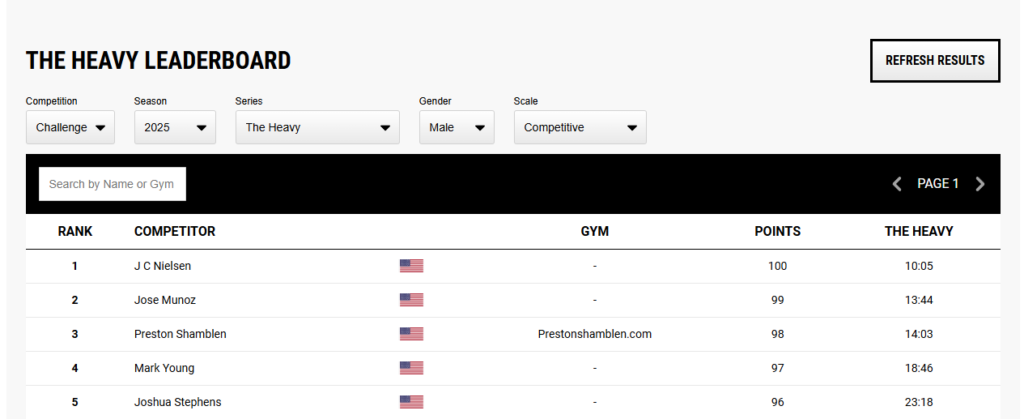
As of today, my score has officially been accepted by Rogue Fitness. I’m now ranked 3rd on the 2025 competitive leaderboard for The Heavy challenge — carrying 105 lbs for 1 mile in 14:03.
Ranked just behind J C Nielsen and Jose Munoz, I’m proud to represent PrestonShamblen.com as my gym. It’s not just a website — it’s the embodiment of how I train, build, write, and prove that self-directed work can compete with anyone, anywhere.
When most people think about power, they think about money. Some think about influence or fame. But real power? Real, measurable, thermodynamic work? That’s something else entirely but easy to measure and actually important!
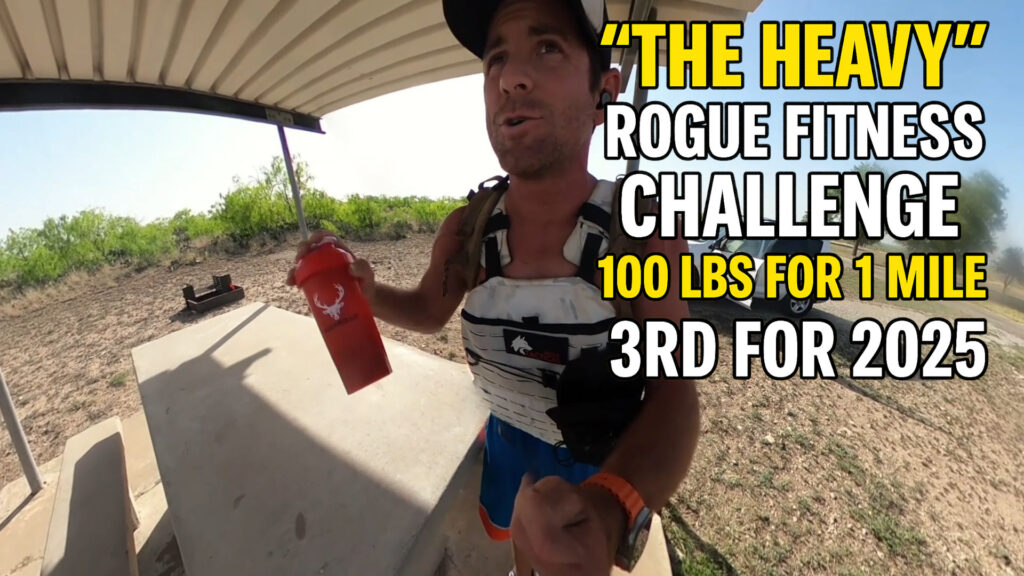
I just finished a rucking challenge called “The Heavy” from Rogue Fitness, a well-known strength and conditioning equipment company that also hosts physical challenges to test raw athleticism—a brutal test of carrying 100 pounds over one mile, for time. My time? 14:03. And my load was 105 lbs, filmed on my Gopro Max 360. That time currently places me **3rd in the world for 2025 ** , but I’ll save at least a couple minutes off of this soon 😉 . And if you’re wondering, yes—this video is featured below. My sweat and tears blur the camera haha!
What Is Rucking—and Why Does It Matter?
Rucking is as simple as it gets: throw weight on your back and move. Maybe it’s food for a journey, maybe it’s rocks. That’s it. But the effects are anything but simple. Rucking combines endurance, strength, posture correction, and real-world functionality. It’s the perfect blend of heart, muscle, and discipline. Unlike most weight training(I’m a Certified Personal Trainer now too ❤️ – 📲 )—which spike and drop your heart rate in short bursts—rucking keeps you in the zone. For weight loss, the fat burning zone (65% of your max HR) You don’t just build strength; you build work capacity and muscular endurance.
And work is power. Not metaphorically. I mean literally:
Work = Force x Distance Power = Work / Time
So when someone asks how powerful a person is—well, this leaderboard is a better answer rooted in reality than most others.
From Overweight to Under 10% Body Fat
At one point, I was nearly 90 pounds heavier than I am now. I lost it all by walking(on the farm, beach, desert, state park) , not drinking, and counting calories before ever stepping back in the gym. Eventually I instinctively started adding weight to my walks to combat poor posture, pain and improve circulation. Then more weight to shred the last and hardest bit of body fat around my stomach. Eventually that plus magical Facebook algorithms and a lot of anger led to this challenge.
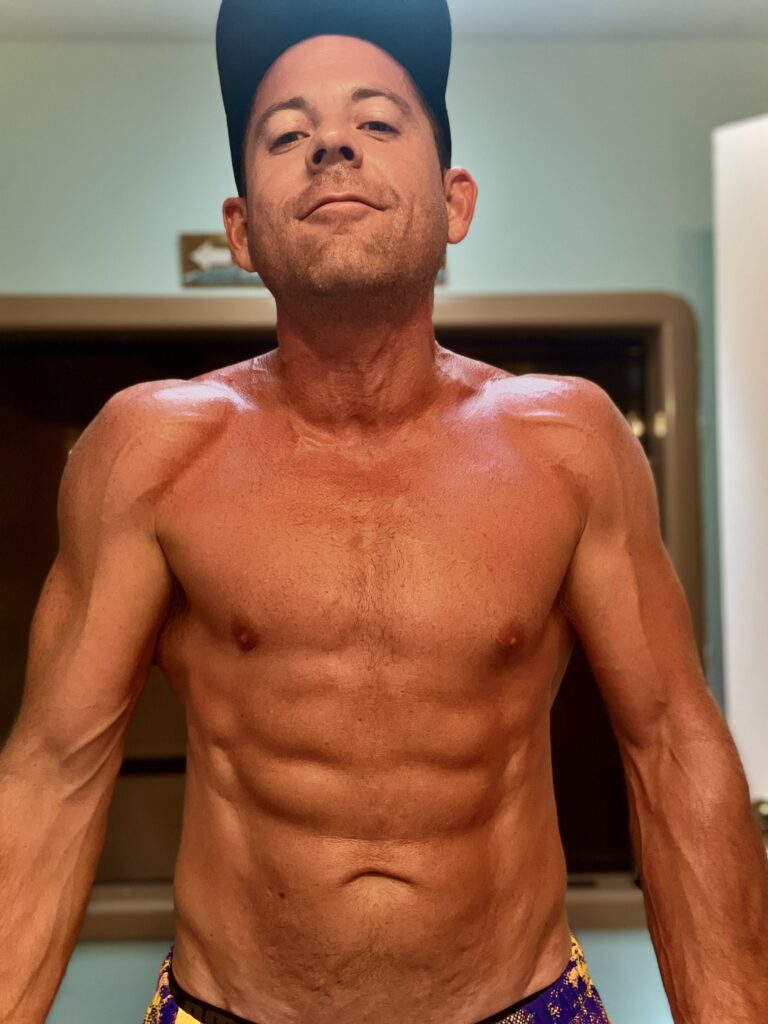
The last bit of fat I dropped—getting to sub-10% body fat—was thanks to walking with 35 lbs or more in the CamelBak Motherlode backpack, shirtless (do it) , under the sun. No gimmicks. Just work and UVP.
The Gear I Used (And Why It Matters)
This challenge was legit. Every ounce mattered. And every piece of gear had a role:
Supplements: FreeBuckedUp.com (free samples + 20% off sitewide — my affiliate link)
The Calorie Burn (And Why It’s Unreal)
Let’s talk numbers. According to standard MET-based estimates, someone my size doing a 105 lb ruck for one mile at that pace would burn 350–400+ calories—in just 14 minutes. 352 calories being the exact number calculated. That’s 25–30 calories per minute, rivaling elite endurance athletes at VO₂ max. IDK lol .
In my case, my Apple Watch Ultra 2 logged an average heart rate of 181 bpm, with a max of 186. That’s above-max heart rate for a 37-year-old. I also exported my heart rate and calorie data as overlays directly into the video so you can see it live.
Why does this matter? Because most people burn fewer calories in an entire hour at the gym than I burned in 14 minutes. Most fitness watches underestimate rucking because they don’t account for load and placement.
I have a special calculator. Cough.
If you’ve ever felt discouraged because your watch said you only burned 100 calories rucking, just know—it was probably wrong. Weight matters. Terrain matters. Effort matters.
Why This Challenge Matters
This wasn’t just about beating other people. This was about proving to myself—and anyone watching—that you can reclaim your body, your health, and your power. One ruck at a time.
Because we’ve lost the script. Somewhere along the way, we forgot what real effort looks like—and how reclaiming our health through hard, honest work is one of the most powerful things we can do. Today, we can actually measure work and power more easily than ever. This reconnects us to reality, to our bodies, and to a kind of labor that always pays off. Not in dollars, but in years added to your life, in clarity, in confidence and ability. Every opportunity in life requires movement. Walking is universal. And this kind of work—real, physical, self-directed effort—always has positive expected value. In a world filled with shortcuts, stimulants, filters, and algorithms that don’t pay off… there’s something honest about loading up your spine with weight and seeing what your body can do.
I’ve got more videos coming. More gear to test. And a lot more people to inspire. But for now? This is the one that counts.
This is the one that gets my foot in the door. I know I can do better, and I will. But we’ve been working with the MVP mindset—get something real done, now, ship it, then iterate. And this got done.
Watch the full video below. Judge it with your own eyes. Then ask yourself:
Could you do this? Could you train to do it?
If the answer is yes, then welcome to the real world of work thanks for coming in today :).
This wasn’t a perfectly optimized run. Not even close.
By the time I started the challenge, I’d dropped my earbuds, my heart rate was already up, and I hadn’t eaten much more than a Clif Bar and a handful of jerky all day. My body was running hot — borderline fasted — and I was still cleaning a pool an hour beforehand, burning calories like crazy. Add in a Florida afternoon with near 90-degree heat, and yeah… this was a furnace test.
And still: 14:03 with 105 lbs on my body, and 3rd place on the leaderboard for 2025.
If anything, this just proves how much room there is to improve. With better prep, more fuel, a little salt, and a tighter setup, I know I can shave off 2 minutes — maybe more.
I’m coming back for that #1 spot. Maybe during the Gator Bowl. Maybe sooner.
PrestonShamblen.com isn’t just a gym — it’s a proving ground. And we’re just getting started
Stay tuned for future breakdowns, gear reviews, and app updates at PrestonShamblen.com
Most people think of the Golden Rule as simple morality. “Treat others how you want to be treated.” Sounds nice, but we don’t stop to realize that this isn’t just a rule about being polite — it’s actually the foundation of intelligence and life itself. It’s how anything works at all.
Without it, nothing can function — not society, not AI, not your own life.
What Intelligence Really Is
There are a thousand ways to define intelligence. People throw around words like IQ, problem-solving, memory, logic, academic success. That’s all fine, but none of it matters if you’re missing the most important kind of intelligence:
The intelligence to realize that other people exist. That their experience matters. That your actions affect them. And that the only way to build anything real is to respect that fact.
This is what makes us different from other animals and enabled us to build all that we have. It doesn’t matter how much you know, how fast you can process information, or how much money you have. If you can’t realize that you might be wrong, and that others might know something you don’t — you are, by definition, unintelligent.
That’s the rule. It applies to people. It applies to society. It even applies to artificial intelligence.
Why AI Only Works Because of the Golden Rule
Here’s the part nobody talks about: AI literally cannot function without respect. Not because it has feelings — but because it has to follow the rules and requires infinite GPUs. Structure. Boundaries. Feedback loops.
If AI doesn’t respect your input, your intent, and the logic of reality, it collapses. You wouldn’t use it. It would be chaos.
And that’s exactly how society collapses, too. The Titanic worked… until it didn’t.
Systems can run on arrogance, apathy, or ignorance — but only for a while. They last longer and better when they’re built on respect.
Respect Is the Only Way to Improve
Here’s something else people forget: Respect doesn’t mean being passive. It doesn’t mean silence. It doesn’t mean letting people wreck themselves.
Real respect means telling people when they’re wrong. Caring enough to confront. Stopping someone when they’re drinking themselves to death, destroying their health, or sabotaging their future.
If someone watches you wreck yourself and stays quiet — that’s not respect. That’s apathy. And it’s the opposite of intelligence.
The only way to better yourself is to realize you could be wrong. To listen. To look in the mirror. To refine.
How can you possibly acquire knowledge if you assume you already know?
Why We’re All Failing Right Now
Think about how much time people spend arguing online. The average person is on their phone for four, five hours a day — scrolling, bickering, posting, performing. The average person has 1,000+ friends on Facebook.
And yet, almost nobody can solve their own problems. Why?
Because there’s no respect. Because people aren’t working together. Because we’ve been programmed to divide, argue, and posture.
You’d think with 1,000 friends, you could solve anything — start a business, buy a house, build something real. But it doesn’t happen. Not because the tools don’t exist. But because the behavior, the rulebook, is missing.
Imagine if every person on your Facebook respected you enough to share one video you made. You’d be free. And then you’d help them in return. That’s how things are supposed to work. That’s how society survives. But we’ve traded that system in for cheap arguments and distractions from people who dangle things we think we want and things they say they can provide in front of us.
The Rulebook of Life
You can try to outsmart life all you want. You can chase shortcuts, money, hacks, status, or speed. But none of it works if you don’t respect it.
Life is like Sudoku. You can’t brute-force your way through it. You have to follow the order, be patient, and respect the structure. If you do, it unravels itself. If you try to cheat, you get lost.
That’s how fitness works. That’s how sobriety works. That’s how value investing works. That’s how AI works. That’s how society works. That’s how your own mind and body works, all trillions of cells.
And here’s the truth most people miss: Without respect, you’re just one brain — or person. With respect, you’re many. You’re part of something bigger. You multiply yourself. You unlock intelligence. You make survival possible.
And all of it runs on one weird trick called respect.
You can call it morality. You can call it intelligence. You can call it survival instinct. Doesn’t matter. It’s the rule.
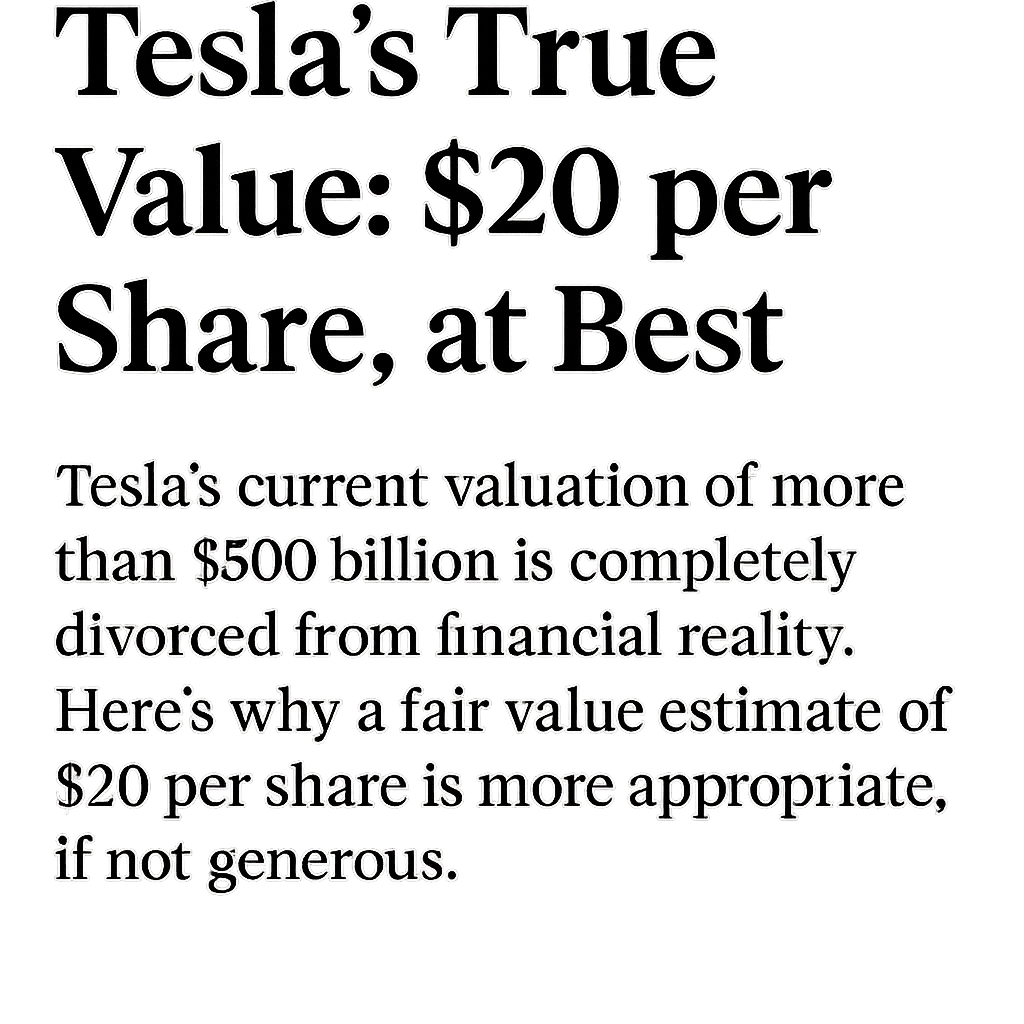
Tesla is one of the most overvalued companies in modern financial history. Despite declining margins, missed product deadlines, and competition eating away at its market share, Tesla continues to trade at levels that imply decades of exponential growth, groundbreaking product execution, and monopolistic dominance in multiple sectors. The reality? None of those assumptions hold up to scrutiny.
As someone who believes in fundamentals, numbers, and the core principles of value investing, I wrote this article to lay out the clearest case possible: Tesla’s true value is closer to $20 per share — and that’s being generous. I’m not writing this out of spite — I just don’t want to see everyday people collectively lose a trillion dollars. Many investors are overexposed to Tesla through retirement accounts, index funds, and pension plans, often without even realizing it.
1. Valuation vs. Reality: The P/E Illusion
As of March 2025, Tesla trades around $280 per share, with a P/E ratio of roughly 150. With earnings projected to drop 30% this quarter and even more in Europe and North America, that figure could soon be well above 200, or even 430 if you strip out regulatory credits that account for much of Tesla’s profitability.
For comparison:
Ford and Toyota have P/E ratios of 10–12.
They sell more cars and pay dividends.
Tesla’s 150x multiple implies it’s not just a car company but a tech company with software margins. That narrative falls apart under real scrutiny.
If Tesla were priced like Ford or Toyota (10x earnings), its share price would be:
$7B earnings ÷ 3.2B shares × 10 = ~$21.88/share
$5B earnings ÷ 3.2B shares × 10 = ~$15.63/share
$4B earnings ÷ 3.2B shares × 10 = ~$12.50/share
2. $55 Billion Compensation vs $36 Billion in Total Profits
Elon Musk’s $55 billion compensation package was not only excessive — it was larger than all of Tesla’s lifetime net income combined. As of January 2025, Tesla’s total cumulative net income is around $36.09 billion. That means Musk has secured a payout 1.5x larger than the company has ever earned.
This compensation was tied to market cap milestones, not operational or product success. It encouraged hype over delivery, vaporware over profitability. It helped drive the very narrative bubble that made Tesla look more valuable than it is.
Musk didn’t do this alone. Tesla’s board, including his own brother Kimbal Musk, approved these terms. Board members have also been cashing out over the past year, selling tens of millions in stock while retail investors held the bag.
Tesla insiders have not bought shares in years.
3. Regulatory Credits: The Hidden Crutch
Tesla’s profitability has long depended on regulatory EV credits, which are payments Tesla receives from other automakers who fail to meet emissions standards. These are not recurring revenues and have nothing to do with actual product competitiveness.
Some years, credits made up over half of Tesla’s net income.
This is not sustainable. Governments around the world are slashing these credits. In March 2025, Canada froze $43 million in EV rebate payments to Tesla and barred the company from future participation, citing tariff violations. Tesla had previously claimed $713 million in Canadian EV rebates since 2019.
This pattern is likely to continue. And without credits, Tesla’s real earnings collapse.
4. FSD: Deferred Revenue Tricks, Safety Flaws, and Hardware Shortcomings
Tesla books Full Self-Driving (FSD) revenue as deferred, allowing it to inflate its cash flow without delivering the promised product. As of now, FSD still requires full driver supervision and doesn’t meet the definition of autonomy.
Only about 2% of Tesla buyers purchase FSD. Other automakers offer better or comparable driver assistance systems for free, while Tesla charges $8,000 to $15,000 — and makes you repurchase it with each new car.
According to Consumer Reports, Tesla’s system consistently ranks below offerings from GM (Super Cruise), Ford (BlueCruise), and Mercedes-Benz, all of which allow for longer hands-free operation with fewer interventions. A 2023 NHTSA safety study also showed that FSD required interventions as frequently as every 100 miles, while the average American drives 500,000 miles between accidents. That suggests FSD may be less safe than a human driver.
Why? Because Tesla’s hardware is worse than a human’s. The FSD vision system reportedly operates at 720p resolution and 18 frames per second — far lower than the information-processing capability of the human eye. For comparison, most modern gaming monitors run at 144 fps or higher, and our natural vision operates without “frames” and in near-total real-time with much greater peripheral depth.
Tesla omits LiDAR, a critical sensor used by nearly every other autonomous driving platform, including Waymo and Cruise. Without it, the car can’t reliably detect obstacles. In one case highlighted by YouTuber and former NASA engineer Mark Rober, a Tesla using FSD drove directly into a physical wall painted to look like an open road. LiDAR would have easily caught that and did in the same video with offerings from competitor car companies.
FSD also introduces enormous legal liability. If Tesla ever enables true full autonomy, the company could become responsible for billions in accident-related lawsuits. So even success poses downside.
This is not a moat. It’s a software grift — and a liability.
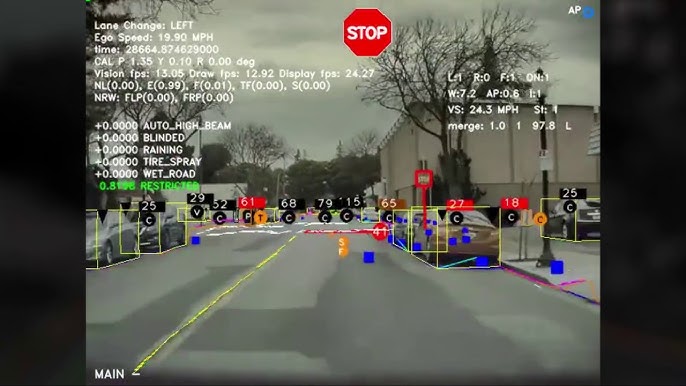
Below is a visual of Tesla’s FSD system in action. Notice the frame rate shown at the top: “Display fps: 24.27” and “Draw fps: 12.92”, well below even basic modern hardware standards. In practice, these values often fluctuate, and some users report peak operation closer to 18 fps — a level that would be unplayable in any driving video game, let alone trusted for real-world navigation.
This inconsistent low-frame-rate performance makes it fundamentally incapable of matching human reaction time — let alone surpassing it — and it’s further proof that Tesla’s refusal to adopt LiDAR and other industry-standard tools is a fatal flaw.
5. Energy, Charging, and 4680 Battery Hype
Tesla bulls often point to the company’s energy division, battery tech, or charging network as justification for the valuation. But these are low-margin, capital-intensive sectors that simply cannot generate orders of magnitude profit.
Even the largest gas station chains (like 7-Eleven) have modest valuations. Tesla’s 4680 battery tech is still unproven and hasn’t delivered game-changing energy density. And its energy products face stiff competition with little differentiation.
The entire energy sector is known for low margins, and no reasonable investor would believe these divisions can replace declining vehicle sales.
6. Musk’s Distractions and Conflicts of Interest
Elon Musk is not focused on Tesla. He is frequently seen with political figures, dabbling in international affairs, and managing multiple other companies including X/Twitter, XAI, and Grok.
Twitter alone is reportedly worth less than half of what Musk paid, now saddled with $13 billion in debt and struggling to generate enough income to service it. Despite that, Musk recently convinced another investor to buy in at his original price, just to keep the valuation from crashing.
He has also funneled Tesla talent and AI resources into his side ventures, essentially siphoning value from Tesla for personal gain. This is a major governance issue.
7. Vaporware: Roadster, Semi, Robovan
Tesla has collected over $250 million in reservations for the next-generation Roadster, which has not been delivered. Many customers paid $250,000 each, and many others between $50,000 and $64,000. The car doesn’t exist. Musk even claimed it might be able to hover using cold gas thrusters, like something out of Back to the Future.
Total customer deposits for undelivered products, including the Tesla Semi, may exceed $1 billion. The Semi has barely shipped, generates almost no revenue, and has been seen broken down in public. Its most visible role has been delivering potato chips.
Tesla has even floated the idea of a Robovan — a product that likely won’t be built and adds to the long list of undelivered promises.
8. Optimus: Overpriced Robots for a World That Can’t Afford Them
Tesla’s humanoid robot, Optimus, is a narrative product, not a real one. The first demonstration featured a human dancing in a costume. That set the tone for the entire project.
Even if a general-purpose robot were possible, it would likely cost millions of dollars. Tesla suggests a price around $30,000, but the average global income is under $10,000 per year. Most Americans couldn’t afford it either.
General-purpose robotics are extremely difficult. Human biology is far more efficient. Our energy density is higher. We don’t require charging ports. A nanny, housekeeper, or assistant is cheaper, safer, and more flexible. And they benefit society.
The only realistic use case for Optimus is sending a few demo units to influencers or streamers for hype purposes. The chance that this becomes a major revenue driver is close to zero.
9. BYD and the Competitive Reality
BYD plans to sell 5.5 million vehicles in 2025. That’s more than double what Tesla is projected to sell. BYD offers better value, more variety, and has already integrated advanced driver assistance into its lineup.
Tesla’s first-mover advantage is gone. Its competitors are not just catching up — they’re passing it.
Tesla trades around $280/share. Let’s do the math.
Tesla’s estimated real annual earnings (excluding regulatory credits and factoring in a 30% drop) are around $7 billion. With 3.2 billion shares outstanding, here’s the valuation at a reasonable multiple:
15x earnings = $7B x 15 = $105B
$105B / 3.2B shares = ~$32.80/share
If real earnings are lower, say $5 billion:
15x earnings = $75B
$75B / 3.2B shares = ~$23.44/share
If Tesla earns $4 billion this year:
15x = $60B market cap → ~$18.75/share
Compare that to the same earnings at 10x multiples:
$7B x 10 = $70B / 3.2B shares = ~$21.88/share
$5B x 10 = $50B / 3.2B shares = ~$15.63/share
$4B x 10 = $40B / 3.2B shares = ~$12.50/share
No guesswork. No need to invent new math. No politics. Just basic valuation logic.
Even if you give Tesla every benefit of the doubt, $20/share is still generous.
Let’s be real — I’m probably not going to write this perfectly on the first try. I can tell you exactly what to eat and what to do, and yes, it will work every time… but that’s not always the real problem. This is as much about mindset as it is about math, so I’m going to keep rewriting this until it hits home. For now, let’s keep it simple.
Step 1: Know Your BMR
Your Basal Metabolic Rate (BMR) is the number of calories your body burns each day just to keep you alive — breathing, blinking, existing.
You can Google a “BMR calculator” to get a basic number, but I highly recommend getting a ~$20 body composition scale off Amazon instead. These scales estimate your body fat and muscle mass, which matters way more than just your weight.
Muscle burns more calories than fat — even while you’re doing nothing.
Right now, I’m sitting below 10% body fat by doing exactly what I’m laying out here.
Tracking your heart rate and daily activity is crucial. Don’t guess. Know.
Step 3: Download MyFitnessPal
This app is your nutrition HQ. It syncs with your fitness tracker and your scale, and it tracks the calories you eat and the calories you burn — in real time.
It has listings for everything: fast food, chain restaurants, grocery store items, fruits, mac and cheese, whatever. It’s free and easy to use. You don’t need the premium version.
The goal: eat fewer calories than you burn. That’s called a calorie deficit — and it’s the only way to lose weight.
I recommend a deficit of up to 1,000 calories per day. More than that and you’re likely to burn muscle or burn out.
Step 4: Sync It All Up
Link your scale, watch, and MyFitnessPal so your calorie data updates automatically.
If you’re using an iPhone and Apple Watch, this process is seamless. If you’re not, it’s still doable — it just takes a few extra taps. The point is to have one app that tells you what you’ve burned and what you’ve eaten — so you can adjust in real time.
Step 5: Burn Fat Smarter — Not Harder
The best way to burn fat is to keep your heart rate at 60–70% of your max. Your max heart rate = 220 minus your age.
So at 37 years old, my fat-burning zone is around 115–130 BPM. I hit that zone best by rucking — walking with a weighted vest or backpack. It’s low impact, easy to start, and incredibly effective.
Walking with weight is one of the best things you can do for your body — period.
If you’re very overweight, you may not need extra weight at first. Walking alone will get your heart rate up. As you lose weight, you’ll need to go faster, uphill, or add resistance to stay in that fat-burning zone.
If you’re looking for a solid weighted vest, this one’s a great option. I personally used a big CamelBak with 40 lbs of plates and gear for a long time.
Bonus: Supplements That Actually Help
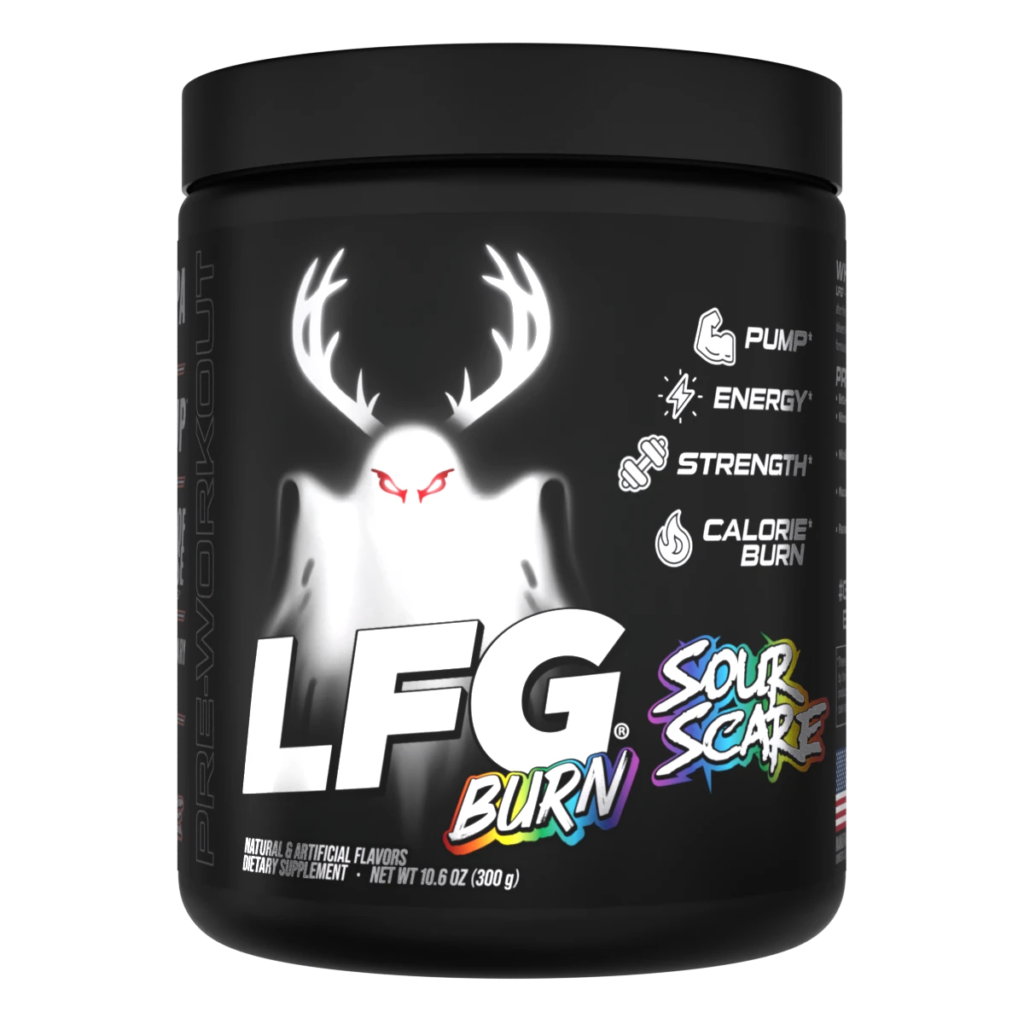
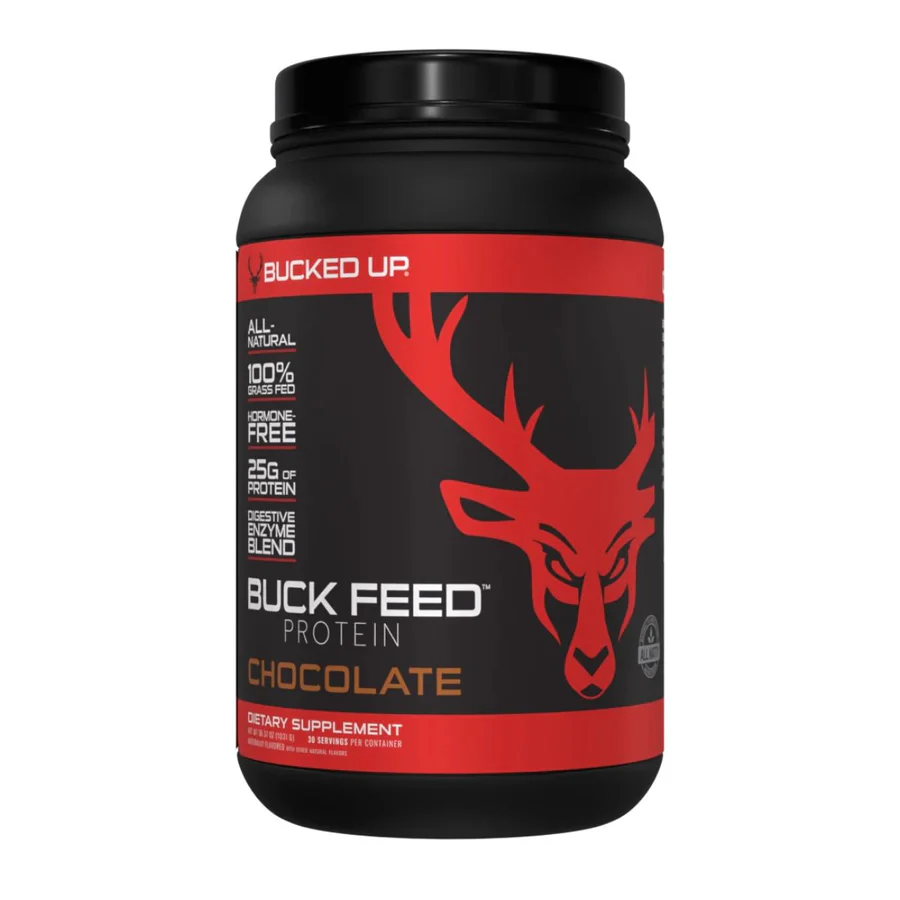
If you want an extra boost — energy, mood, fat burn — I recommend this product from Bucked Up. I’m an ambassador, but I’ve used many of the ingredients in this blend long before I ever partnered with them.
Key ingredient: Mucuna Pruriens — a natural source of dopamine. It helps with motivation and mood, similar to how energy drinks use L-Tyrosine.
Click this image to get 20% off anything from Bucked Up, anytime. Yes, I might get paid — but you’ll get a deal. Win-win.
TL;DR (Overview):
Figure out your BMR (and ideally, your body fat %).
Track everything — calories in, calories out.
Stay in a calorie deficit daily.
Keep your heart rate in the 60–70% range to burn fat most efficiently.
Walk with weight (rucking) to burn fat and build muscle.
Stick with it — this isn’t a 7-day trick. It’s a process.
Do this for a few months and come back when you’re ready to level up. I’ll be here.
I guess you could say things are going pretty well.
I’m officially down 90 pounds from my heaviest, now sitting below 10% body fat, and recently picked up a small sponsorship from TheFeed.com—plus I’m now a Bucked Up Ambassador!
If you’re unfamiliar, Bucked Up makes a full line of performance supplements, including their signature Deer Antler Velvet Spray, which contains IGF-1 (Insulin-like Growth Factor 1)—a compound believed to help with muscle, bone, and tissue repair. I’ve used it before and definitely noticed a difference. Now that I’m an ambassador, I’ll be reviewing their entire product line and sharing my honest experience.
Their pre-workouts are stacked with proven ingredients like:
L-Citrulline – for blood flow, vascularity, and endurance
Beta-Alanine – for buffering lactic acid and reducing fatigue (tingles included)
Creatine, Caffeine, and more – everything you’d want for serious performance
Before Bucked Up, I used to mix my own supplements at home. I’ve got 30+ bags from BulkSupplements, and it takes 5–10 minutes just to blend a comparable stack. It works, but it’s messy, less tasty, and doesn’t include the Deer Antler Velvet. Bucked Up saves time and actually tastes good.
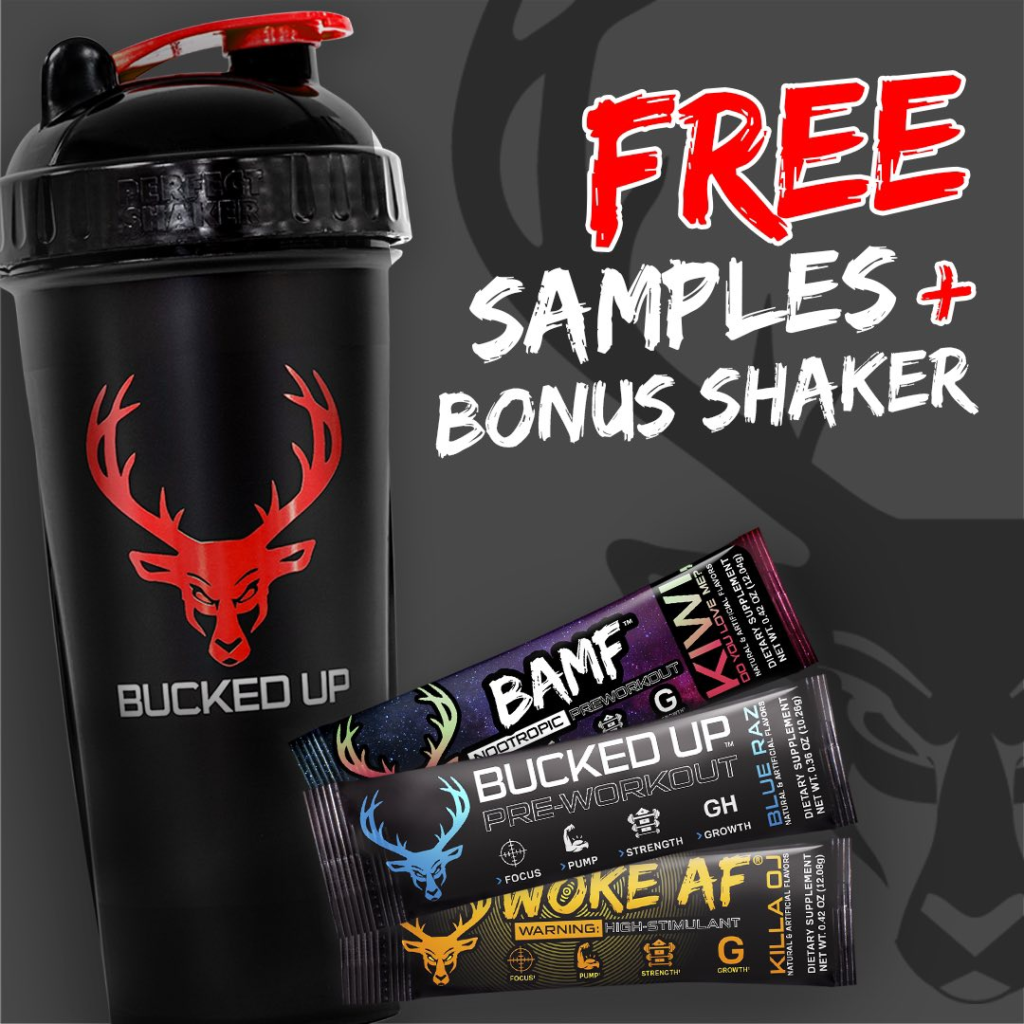
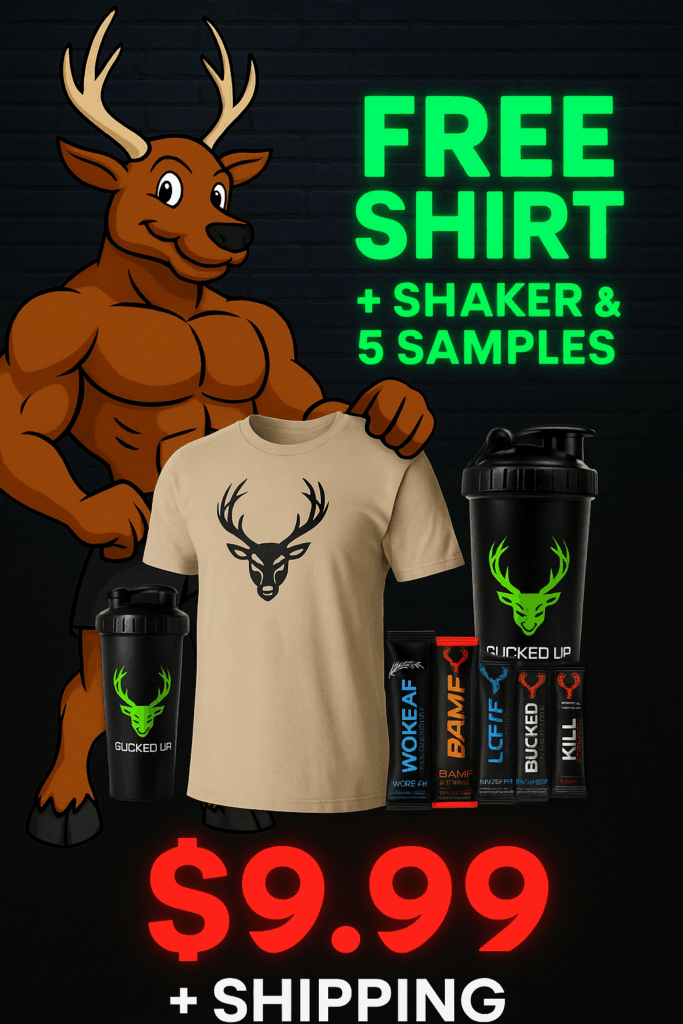
If you want to try it yourself, Bucked Up gave me a special link you can use to pick out free samples and get a free shaker cup (yes, there are pink ones too):
More reviews, breakdowns, and progress updates coming soon. I’ll also be uploading a behind-the-scenes video of my old-school supplement routine compared to Bucked Up’s pre-workouts. Stay tuned.
This is not a prescription, a plan, or a strict regimen. It’s a breakdown of supplements I’ve bought, used, experimented with, or still take depending on the phase I’m in. Some of these I’ve used consistently during weight loss or training, others are things I’ve kept around for when the timing is right. This list will evolve, but for now—consider it a personalized supplement glossary.
Whey Protein from Bucked Up
While I’ve used plant-based proteins like Orgain in the past, these days I mostly use Bucked Up’s whey protein, which delivers great taste, smooth texture, and solid macros. Bucked Up’s blends are also available through my affiliate link, and you can grab free samples (including protein) and a custom shaker at:
👉 FreeBuckedUp.com 💥 Use code automatically applied at checkout for 20% off sitewide.
Orgain Organic Protein + Superfoods Powder Plant-based, mixes well, and doesn’t upset the stomach. Contains extra superfoods and digestive enzymes. A daily staple for general nutrition, muscle repair, and recovery.
Vitamins & General Health
Vitafusion Gummy Vitamins for Men Tastes good, easy to remember to take. Fills in dietary gaps without overwhelming the system. Not perfect, but consistent.
Matcha DNA Organic Matcha Green Tea Powder A rich source of antioxidants and clean energy. Great for circulation, metabolism, and focus. I mix it into smoothies or drink it straight.
Creatine
Creatine Monohydrate Powder (Micronized) The most researched and reliable performance supplement. Helps increase strength, lean mass, and recovery. I usually cycle this depending on training phases.
Amino Acids
L-Arginine Improves nitric oxide production—helps with blood flow, vascularity, and stamina.
L-Citrulline Great for circulation and muscle pumps. Helps with endurance and fatigue resistance.
BCAA 3:1:2 Powder Useful during intense workouts or fasted training for muscle preservation.
D-Aspartic Acid (DAA) Linked to temporary increases in testosterone levels—used occasionally during heavy training cycles.
Adaptogens, Roots, & Herbal Compounds
Maca Root Powder (Organic) Traditionally used for energy, libido, and hormone balance. I add it to smoothies.
Glycerol Powder – Promotes muscle fullness and hydration. Great before a big cardio or strength session.
Mucuna Pruriens – Natural source of L-DOPA, which helps dopamine production. Sometimes used to support mood, motivation, and libido.
5-HTP – Precursor to serotonin. I’ve used this at night to help with sleep and mood regulation.
Bucked Up Products
Woke AF Pre-Workout – High-stim pre-workout that includes ingredients like L-Citrulline, Beta-Alanine, Caffeine, and more. Strong, reliable, and full of what I used to mix manually with raw powders.
Deer Antler Velvet Spray (IGF-1) – One of Bucked Up’s signature products. I’ve used it on and off for years. Promotes recovery and lean tissue repair.
They also offer single-ingredient products like standalone L-Citrulline if you’re into mixing your own formulas. Use my link FreeBuckedUp.com for free samples and 20% off sitewide.
A Note On Consistency
Right now, I’m not taking all of these. Sometimes I go through minimal phases. Sometimes I experiment. This is a toolbox, not a checklist. I’ll continue updating and reviewing each of these in depth over time.
Stay Tuned
I’ll be reviewing each of these products in more detail soon with links, tips, and video content. If you’ve got questions about any of them—or want help picking your own stack—reach out.
Everything here is stuff I’ve used personally. Nothing on this list is fluff.
I didn’t choose the title on this one but if they’re gonna feature my videos I’m cool with it! This is another time lapse composed of like a thousand RAW photos. These types of photos allow me to use the camera sensor on the gopro to it’s fullest for the largest possible resolution while also giving me more freedom to edit. It takes a lot more time to do it all, but I think it’s worth it and sets me apart. I load each photo in to Adobe Lightroom, edit and export them all at once. How I edit them will probably have to be another article. I feel that I am still guessing and changing things up to however I see best or want to try out. After all I don’t even have a 4K TV or monitor here. I have a 2K monitor that is faster for gaming and I am shooting this in 5k! This leaves a lot of guess work and this type of video gets so big that I cannot actually watch it at all on my computer, it just will not load.
Milky Way season shall be upon us soon. The sun shall no longer block the brightest part of the milky way in a month or so and for several months. June or July may be the best time to take photos and hopefully I’ll be around to do just that. Heck I might even buy some real astrophotography equipment.
I hope you enjoy this video, let me know what ya think!
Like humans, sheep don’t always plan their pregnancies. And judging by the situation here on the farm, ours may have made a pregnancy pact — nearly every ewe is birthing twins right now.
We raise Katahdin sheep, a hardy, hair-coated breed originally developed in Maine. They’re well-suited for colder climates and don’t require shearing like traditional wool sheep. That makes them ideal for low-maintenance flocks — but even they prefer to lamb in warmer weather.
It would’ve been better to separate the rams ahead of time to control the breeding season. That way, lambs would arrive during milder months, giving them a stronger start. But nature had other plans. Right now, we’ve got six newborn lambs on the ground — and likely more coming soon.
Life on the Snowy Pasture
View from behind the cabin as Katahdin sheep graze in the snow.
Katahdin sheep graze near the cabin as snow blankets the pasture.
These sheep are adjusting surprisingly well. Katahdins are known for their parasite resistance, strong maternal instincts, and adaptability to pasture-based systems. They shed their winter coats naturally, making them a great option for rotational grazing and small farms.
Meet the Lambs
Newborn lambs adjust to life in the snow, one standing alert while the other rests.
Here’s a clip of one of our newborn lambs calling for its mama — it doesn’t get much more real than that.
Time-Lapse: Cabin Life & Sheep Shenanigans
We’ve also captured a few time-lapses of the sheep doing their thing outside the cabin. One even includes a brief shot of the night sky — though clouds and snow eventually took over and buried the camera lens.
Moving Day — With Stars
In our last time-lapse, you can see us carefully moving the flock to a new paddock. We’re using a temporary fencing setup for now since the sheep are still settling in. Bonus: the stars make a cameo.
Why Katahdins?
If you’re researching breeds for your own homestead or farm, Katahdins are worth considering. They:
Require no shearing (hair sheep),
Have excellent maternal instincts,
Perform well in pasture-based or rotational systems,
Tolerate cold and heat surprisingly well,
And are ideal for those looking to reduce labor and vet bills.
They might not be as flashy as some heritage breeds, but they’re practical, efficient, and resilient — just like a good sheep should be.
Gopros have a setting to capture your photos in the fullest size it offers, 5568 x 4176 for the gopro 9. That’s 5K, more than the 5K option for video as well. No sharpening, color or temp changes, nothing. This is a few levels above the normal 4K options you have for time lapses etc and leaves you the most room to make those edits yourself. I recently just bought this 5 TB external HDD and it came with 4 months of adobe photoshop and Lightroom for free. So I am going to try to take full advantage of that trial. Basically I am shooting the time lapses and having them all saved as separate images, opening them all in Lightroom, exporting them, putting them back together in shotcut and exporting as a video. Maybe I will write more about how I do that stuff, but for now here are some photos and a video I made from this process.
This is more than just a smoothie—it’s a strategy. I’ve used this simple recipe through weight loss phases, heavy training blocks, and daily routines. It’s quick, filling, customizable, and delivers everything your body needs in one easy blend.
I first built this out of necessity while living on a farm, and it’s still a go-to for me when I want convenience without compromise. It’s helped me lose over 90 pounds and stay under 10% body fat. Whether you’re bulking up or trimming down, this smoothie hits both marks.
Why Smoothies Work
Webster doesn’t really define “smoothie” the way I do, but here’s my version:
“A blended cold drink designed to build muscle, support fat loss, and give you energy—with almost no cleanup.”
When done right, a smoothie can be:
A powerful meal replacement
A source of clean calories
A digestion-friendly, nutrient-rich blend
A supplement delivery system
A time-saver with long-term rewards
My Goals with This Smoothie
Protein
Protein is the base of everything. Whether you’re trying to build muscle, burn fat, or stay full longer, it starts here.
🧃 Orgain Organic Protein + Superfoods Powder – This plant-based option mixes easily, doesn’t bloat, and includes extras like digestive enzymes and greens. For whey-based protein (which I now use more), Bucked Up’s Protein delivers flavor, smoothness, and results.
Creatine
Creatine is one of the most studied and effective supplements ever.
💪 Micronized Creatine Monohydrate – Helps with strength, recovery, and brain function. I’ve tested it on myself and seen real results. It’s cheap, safe, and massively beneficial.
Fruit & Fiber
I don’t eat much fruit outside of smoothies. But inside one? It’s magic.
Bananas: add creaminess, potassium, fiber
Blueberries: antioxidants, flavor, and digestive balance
I use frozen fruit for cost and convenience
Calories & Satiety
You can’t recover—or gain—without enough calories. These make it count:
Peanut Butter: healthy fats + calories + flavor
Whole Milk or Almond Milk: adds richness and texture
Cinnamon: may support blood sugar control, anti-inflammatory
Smoothie Ingredients
1 scoop of protein powder
5g creatine (approx. 2 tsp)
1 banana
¾ cup blueberries (or other fruit)
½ cup whole milk
1 tbsp peanut butter
1 tbsp honey
1 tsp ground cinnamon
How I Make It
Add frozen fruit and banana to the blender cup.
Pour in the milk (adjust for thickness).
Add protein powder, creatine, cinnamon, peanut butter.
Finish with honey on top (helps it blend faster).
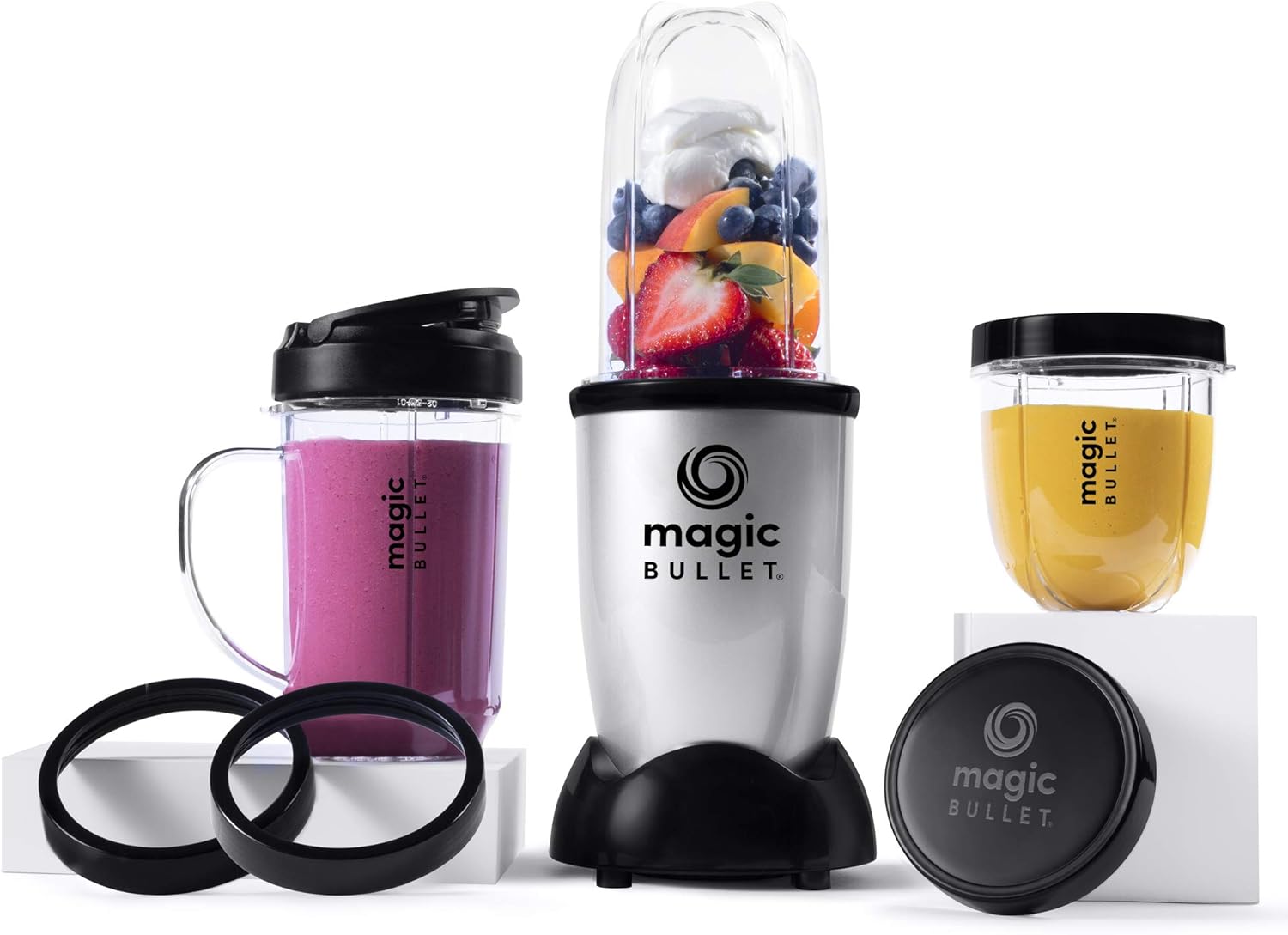
Blend in a Magic Bullet or similar single-serving blender.
Drink straight from the cup or pour into a shaker. Clean up immediately—it’s easier.
Why This Works
I’ve lost 25+ pounds in just a month before using this exact smoothie while rucking and avoiding booze. It gave me steady energy without crashing, helped retain muscle while cutting, and saved time.
You can sub:
Almond or oat milk for whole milk
Hemp seeds or almond butter for peanut butter which is preferred due to the omega 3 content.
Whey for plant protein
Or just water if you’re keeping it lean
This recipe is flexible—and effective.
Stackable Add-Ons (Not Mixed Into the Smoothie)
While I don’t blend these into the smoothie itself, I often stack them around the same time—especially before a workout:
Woke AF Pre-Workout – My go-to for serious training days. High-stim formula with L-Citrulline, Beta-Alanine, and Caffeine to boost blood flow, endurance, and focus.
Deer Antler Velvet Spray (IGF-1) – A Bucked Up staple. I’ve used it for years to support muscle repair and recovery between workouts.
Summary
This smoothie is reliable, simple, and adaptable. It helped me go from overweight to ripped—and it tastes better than most “health” food you’ll find. Add your supplements. Adjust the flavor. Track the calories. Repeat.
Here I am testing out the GoPro 9 Horizon leveling and Hyper Smooth 3.0 with a 4 wheeler on and between Shamblen Farms etc. I would like to have filmed more but the 4 wheeler didn’t seem to be running as well so I had to throw together what footage I had. There is far more land and better shots to take, which hopefully I will be able to do later. Surely I will! I also have footage with a UTV etc so stayed tuned for more! This camera is amazing, without these features the video would seemingly be unwatchable and extremely shaky, even on a paved road… the tires are very knobby and bikes generally vibrate quite a bit. Thanks for watching , subscribe to my youtube for more and have a great day!
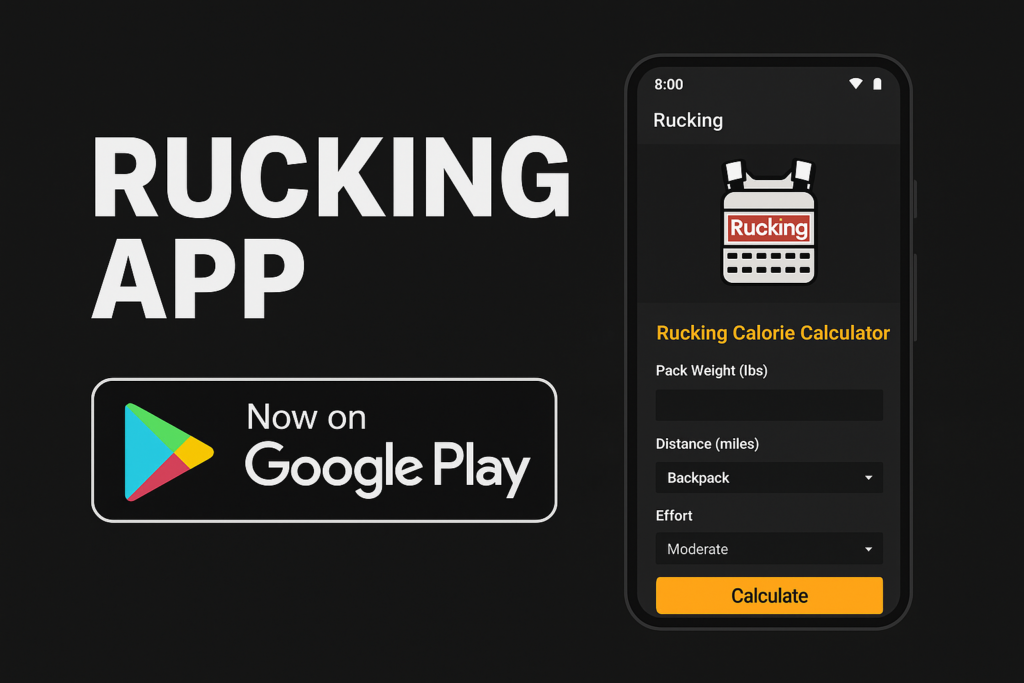
I finally built the rucking app I wish I had when I started my 90-lb weight loss journey. It tracks real ruck calories using your bodyweight, pack weight, distance, effort level, and pack type—things most fitness trackers ignore. Watch the demo, see it in action on the trail, and grab it now on Google Play. Continue reading →
I picked up a CAP trap bar and two sets of bumper plates during Prime Day — about 70¢ per pound with free shipping. Here’s why it’s the best move I’ve made for counteracting desk life. Continue reading →
I always wanted a pool pole that could handle the biggest jobs. This custom 26-foot carbon fiber pole is stronger, lighter, and longer than aluminum — with quick releases that make it fast and fun to use. Continue reading →
Life without a computer wouldn’t change much for me—I already spend hours outdoors rucking and working in the Texas sun. The real difference is economic: computers help me connect, grow my pool business, and share projects like Rucking.pro. For me, the key isn’t abandoning technology, but finding balance between time outside and intentional time online. Continue reading →
The rocket equation doesn’t lie. Starship can’t reach Mars, can’t land, and can’t even reach orbit properly. This post breaks down why I built TheRocketEquation.com — to bring physics back into the space race. Continue reading →
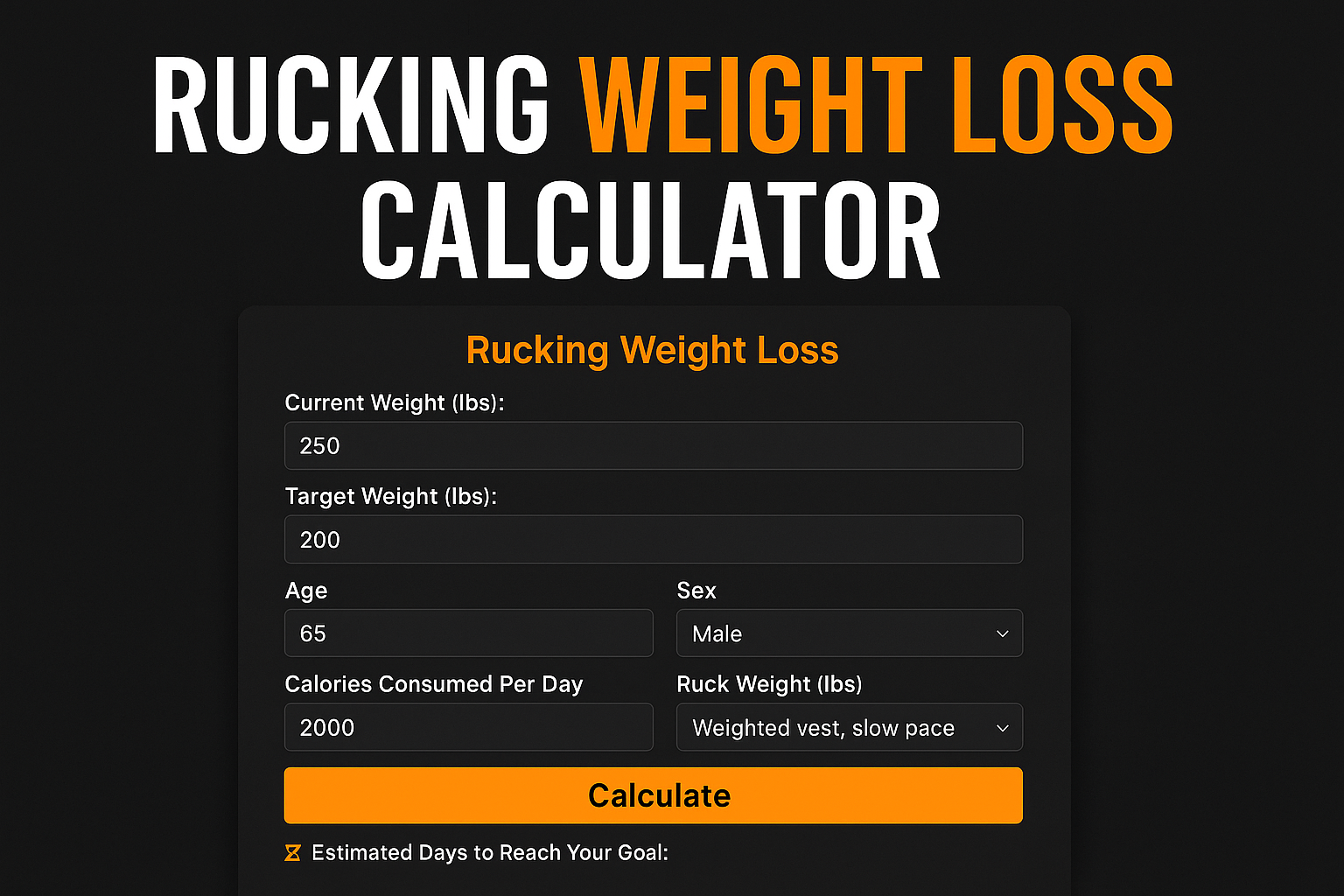
Most people don’t realize how effective rucking is for fat loss — or how off their smart watch really is. This calculator fixes that. Here’s why I built Continue reading →
Ozempic is marketed as medicine, but it's really a subscription to self-denial. You're not gaining health — you're outsourcing willpower, gambling with your hormones, and calling it progress. Continue reading →
Most fitness apps lie to you about rucking. I built a free calorie calculator that gives real estimates based on your weight, added load, and intensity — no sign-up, no BS. Continue reading →
Facebook blocks users from searching the word “kratom,” but still allows paid ads for unregulated 7-OH products — a synthetic compound known to cause respiratory shutdown in small doses. This article breaks down the platform’s dangerous double standard. Continue reading →
Rucking is one of the most effective and accessible ways to lose fat, gain strength, and avoid medical debt — especially if you're over 50. Learn why walking with weight works when other fitness routines fail. Continue reading →
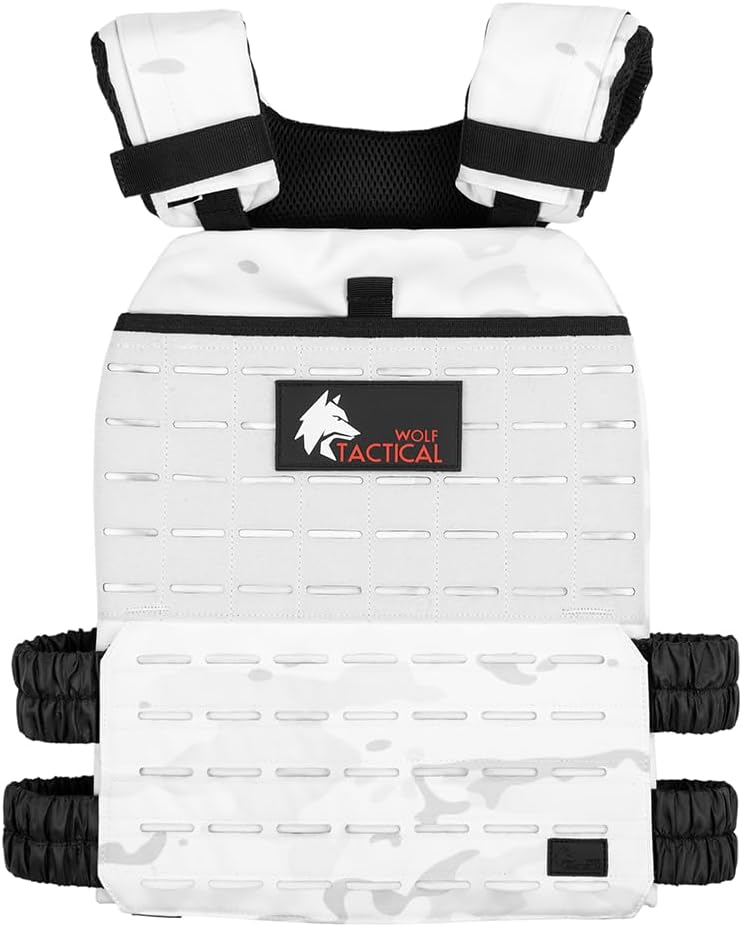
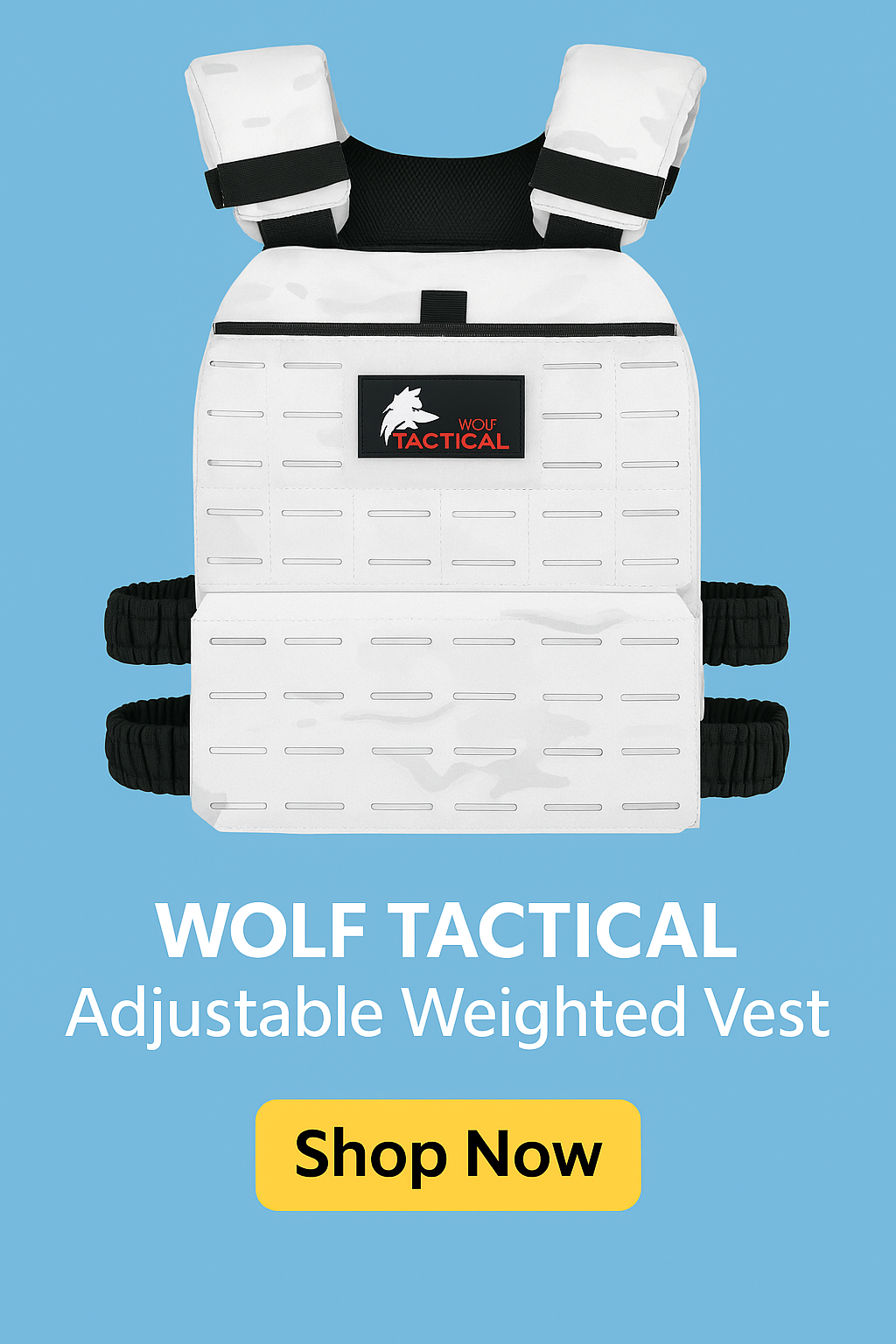
Train harder in style. Click to shop the White Wolf Tactical Vest – now earning you 20% commission!